
Providing the right conductivity sensors for water is crucial in helping your customers maintain optimal water quality across various industrial systems, including boilers, cooling towers, and water processing applications. Supplying reliable, accurate, and cost-effective conductivity sensors not only strengthens your product lineup but also builds trust with your partners.
This guide breaks down what water conductivity sensors are, how they work, the different types of applications, and recommended options to help you confidently offer the perfect fit for the intended use. Here’s what you need to know.
What Are Conductivity Sensors?
A conductivity sensor for water measures the ability of water to conduct an electrical current. This ability depends on the presence of dissolved ions such as salts, minerals, or chemicals in the water. In water-quality applications, conductivity sensors help monitor water purity, control chemical dosing, prevent corrosion, and optimize operational efficiency.
How Do Conductivity Sensors Work?
A conductivity sensor operates by applying an alternating electrical current between electrodes immersed in water. The sensor measures the resulting resistance from the electrical current, which varies depending on the ion concentration in the water. This resistance is then converted into a conductivity measurement, usually micro siemens per centimeter (µS/cm).
What Are the Different Types of Applications for Conductivity Sensors for Water?
Selecting the right type of conductivity sensor depends on the application, water conditions, and measurement requirements. Here are the main types by application.
Cooling Tower Conductivity Sensors

Cooling towers rely on conductivity sensors to monitor the level of dissolved solids in recirculating water. By measuring this, facilities can control blowdown rates, releasing a portion of the concentrated water and replacing it with fresh makeup water. This helps maintain optimal water quality, protects equipment from scale and corrosion, and improves water and chemical use efficiency.
To overcome cooling tower water treatment challenges, it is critical to have a conductivity sensor to work right, every time. Lakewood Instruments offers reliable, simple, and easy-to-maintain water conductivity sensors to optimize cooling tower water conductivity, including 2-Electrode Conductivity Sensors including options for submerged applications, and 4-Electrode Conductivity Sensors. Explore our lineup today!
Cooling Tower Conductivity Sensors
Boiler Conductivity Sensors

In boiler systems, conductivity sensors play a key role in ensuring safe and efficient operation. High dissolved solids in boiler water can cause scaling, carryover, or foaming, which reduces heat transfer efficiency and can damage equipment. Conductivity sensors monitor total dissolved solids (TDS) to manage blowdown cycles effectively, helping operators maintain water purity, maximize energy efficiency, and extend the boiler’s lifespan.
Boiler conductivity sensors work around the clock in demanding, high-pressure environments. For over 45 years, Lakewood Instruments has manufactured dependable, cost-effective boiler sensors with a clean, reliable design that performs consistently. Our SR and HD boiler conductivity sensors pair seamlessly with our full line of Lakewood Water Treatment Controllers, helping you monitor boiler conductivity accurately over time. Explore our boiler conductivity sensor options today.
Process and Condensate Conductivity Sensors
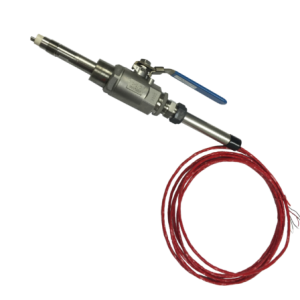
In industrial process water loops and steam condensate return systems, conductivity sensors are used to detect contamination or leaks. In condensate lines, low conductivity typically indicates pure steam return, while elevated conductivity can signal corrosion, pipe leaks, or chemical carryover. In process applications, these sensors help maintain product quality by ensuring water meets required purity standards for production, rinsing, or other critical steps.
For process systems, RO water, or condensate systems, you need more than the standard conductivity sensor, and Lakewood has the ideal solution for these applications. Check out our selection of Process and Condensate Conductivity Sensors.
Process and Condensate Conductivity Sensors
Your Premier Water Conductivity Sensor Manufacturer
Lakewood Instruments delivers high-quality water conductivity sensors engineered to optimize water quality in various applications. We’re here to provide support for all of our products, whether you’re looking for product information or seeking guidance on usage.
Ready to add reliable, accurate conductivity sensors to your offerings? Get a quote or contact us today to discuss your needs!